
Home Depot Clearance Tag Endings Decoded (.02 / .03 / .04 and More)
A widely shared shopper theory about price endings on Home Depot clearance tags: what it claims, why to be skeptical, and what actually matters.
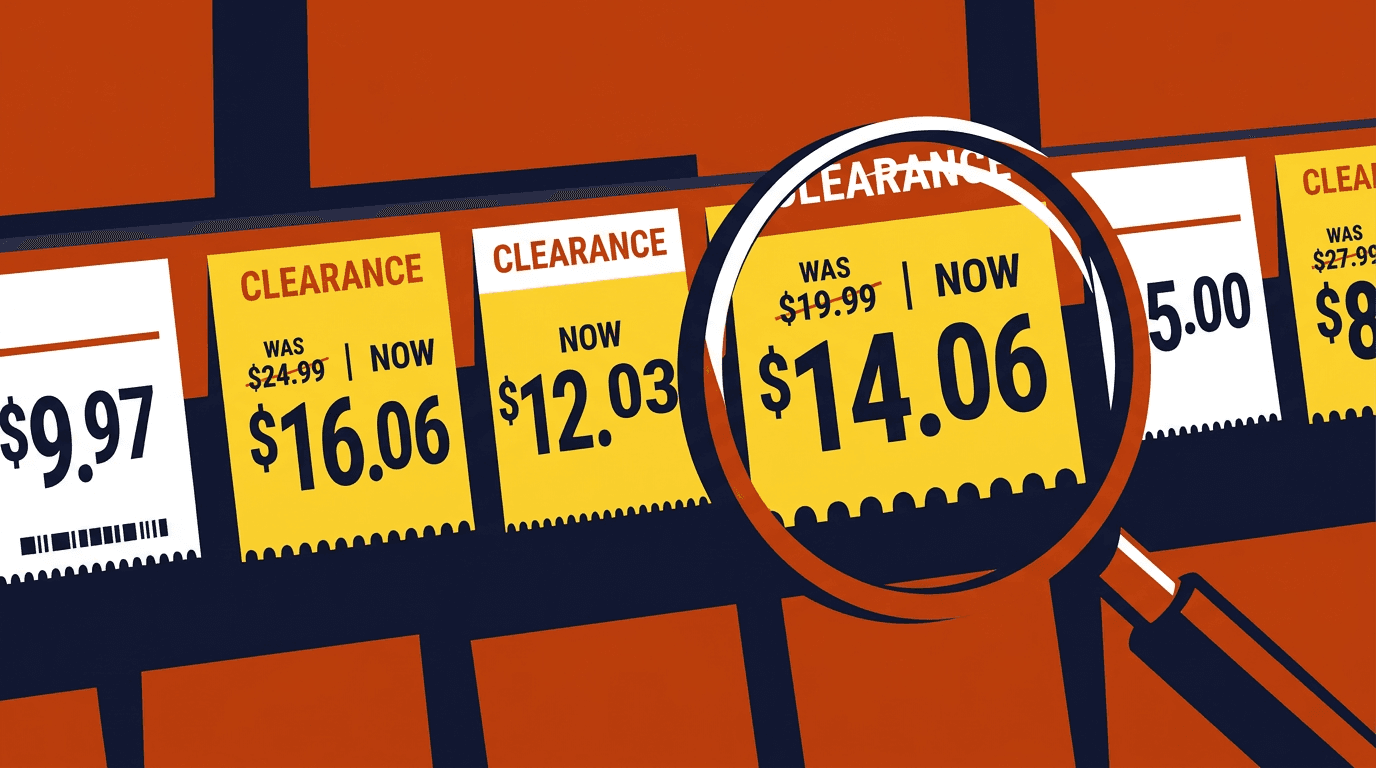
Spend enough time in Home Depot deal-hunting circles and you will run into a very specific claim: that the last two digits of a clearance price supposedly tell you where an item sits in its markdown cycle. It is one of the most repeated pieces of shopping folklore around, and it is worth understanding clearly, including where it comes from, what it claims, and why you should not treat it as fact.
The folk system, as it is usually described
The version that circulates most often in forums and comment sections goes something like this:
- Prices ending in .06 are commonly described as a first markdown, often cited around a 25% discount, and sometimes tied to a roughly six-week review cycle.
- Prices ending in .03 are often described as a deeper, later-stage markdown, closer to the end of an item's time on the shelf before further reductions or removal.
- Prices ending in .02 or .04 show up in some versions of the theory as intermediate steps, though accounts disagree on exactly what each one is supposed to mean.
- Eventually, in this same folklore, a price reaching $0.01 means the item has hit the end of the line, the point covered in detail in our penny items guide.
You will find versions of this chart passed around with a lot of confidence, sometimes presented as if it were an internal manual that leaked out. It is worth being direct about why that confidence is not fully earned.
Why this should be treated as a theory, not a fact
Home Depot has never publicly confirmed a fixed, nationwide price-ending code, and there is no official document available to shoppers that lays one out. What actually exists is a large, decentralized body of shopper observations, compiled over years across thousands of independently run stores. That is a meaningfully different thing from a confirmed corporate policy.
A few reasons the pattern is inconsistent in practice:
- Store-level and regional variation. Home Depot stores are not all run identically. Markdown practices can differ by region, by individual store manager, and by category.
- Category differences. Seasonal goods, appliances, and general merchandise do not necessarily move through the same markdown structure.
- Small sample sizes. Most of the “proof” behind this theory is anecdotal: a shopper noticing a pattern at their own store and generalizing it nationwide.
- Selection bias. People post the times the pattern matched. Nobody writes a viral post about the time a .03 tag was just a regular sale price.
None of that means the pattern is made up out of thin air. Enough shoppers have reported similar endings often enough that it is probably tracking something real about how markdown systems compute prices. But treat it the way you would treat any widely shared shopping folklore: a loose signal, not a lookup table.
What actually matters more than the ending digit
If you want a more reliable read on where an item stands, these signals tend to be more trustworthy than the last two digits of the price:
- The date printed on the tag. Clearance tags typically carry a markdown date. Community reports commonly describe roughly six-week review cycles between markdown stages at many stores, which lines up with the idea that an item sitting on an old tag date is more likely to be near its next markdown.
- Tag color. Shoppers commonly report a difference between yellow clearance tags and white standard tags, with yellow typically signaling clearance or discontinued status rather than a temporary promotional price. As with the ending-digit theory, this is a pattern reported by shoppers, not something Home Depot publishes as a formal system.
- What the register actually says. The printed tag is not always in sync with the current system price. Scanning the item, with the Home Depot app, a store kiosk, or at checkout, is the only way to know the real current price with any confidence.
Put simply: automated, current-data scanning beats reading tag digits every time. A price ending is a hint at best; a live scan of the actual register price is closer to ground truth. This is also why relying on someone else's tip from a few days ago, even a well-meaning one, has real limits, a topic we cover in more depth in our comparison of BrickSeek alternatives for Home Depot.
How to use this information responsibly
If you see a .06 or .03 ending on a tag, it is reasonable to take a closer look at that item. Check the date, check the tag color, and scan it if you can. What is not reasonable is assuming the ending digit alone tells you the exact discount or exactly how many days are left before the item disappears. Use it as one input among several, not a rule to build a whole shopping trip around.
It is also worth remembering that even a confirmed markdown stage does not guarantee the item will still be there when you arrive, or that a cashier will honor a price that looks unusually low. Store policy and stock levels change quickly, and no price-ending chart can account for that.
Frequently asked questions
Where did the tag-ending theory come from?
Nobody can point to a single origin. It has circulated across forums, comment threads, and short-form video for years, with each retelling adding or dropping a digit or two. That kind of drift is typical of crowd-sourced folklore: useful as a starting point, but not something to treat as an authoritative source.
Does the same theory apply to other retailers?
Similar price-ending folklore exists for other big-box chains, each with its own commonly cited digits. The details differ enough between retailers that a pattern reported for one store chain should not be assumed to carry over to Home Depot, or vice versa.
Should I ask a store associate to confirm a markdown ending?
You can ask, but most associates are not trained on, or authorized to explain, an unofficial shopper theory. A more useful question is simply whether an item is being discontinued or cleared out, which staff are often more willing to answer directly.
A better signal than any tag
Because tag endings and colors are inconsistent from store to store, myStoreAlert does not try to decode them at all. It scans actual store-level pricing directly, on a daily basis, and surfaces what is genuinely moving toward clearance or penny pricing at your specific store. That removes the guesswork of trying to read a tag correctly from across an aisle.
Start your free 7-day trial and get alerts based on real pricing, not a chart someone photographed in a parking lot.