How to Read a Home Depot Clearance Tag in the Aisle
A genuine clearance tag carries a date and a WAS price. Here is how to tell it apart from a promotional label, and what to check before you buy.
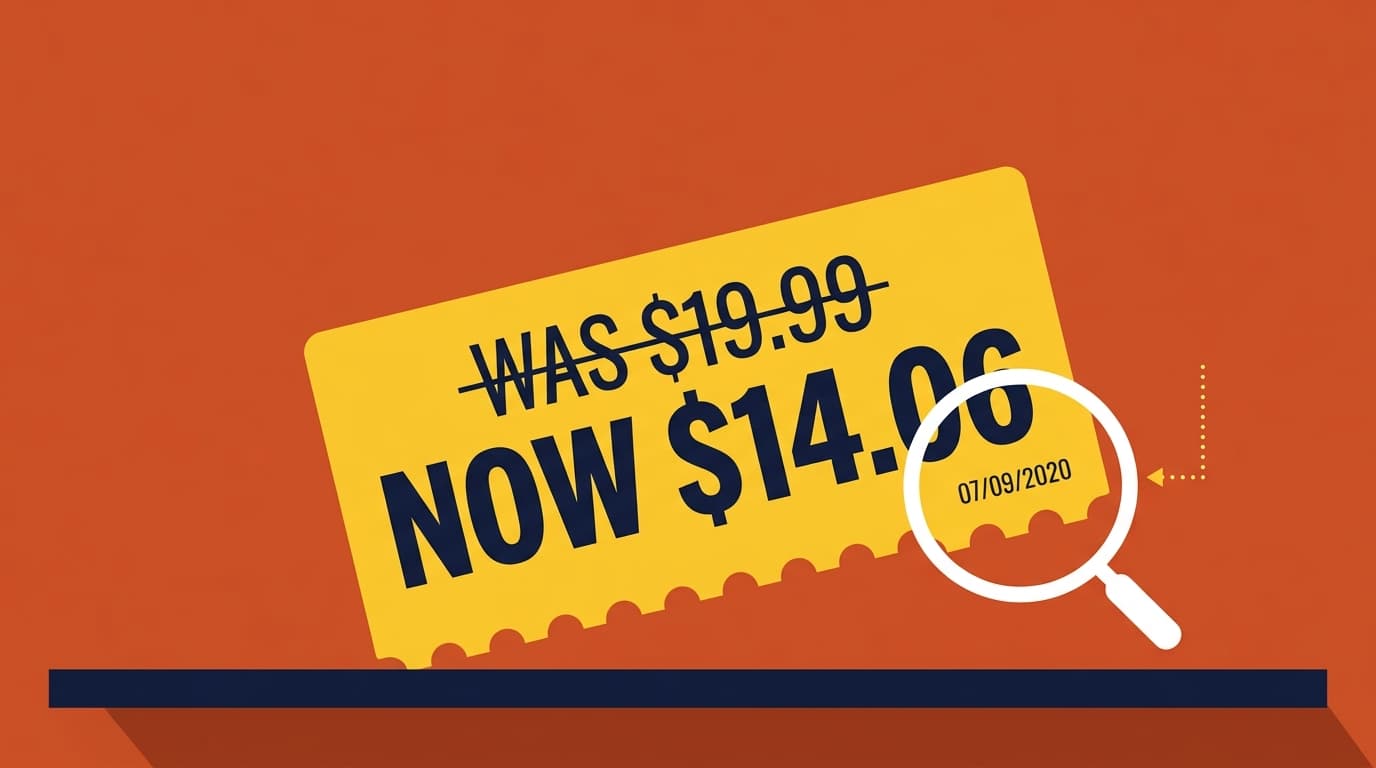
Not every yellow tag at Home Depot is a clearance tag. Some are promotional labels for a limited-time deal on a product that is still fully stocked and coming right back at full price next week. A genuine clearance tag carries a date and a crossed-out “WAS” price. A promotional label usually does not. That one distinction settles more confusion in the aisle than anything else on the tag.
Real tag vs. promotional label
Pick up the tag and look for two things: a date printed somewhere on it, and a crossed-out “WAS” price above the current one. If both are there, you are looking at an item that has actually been marked down from its regular price, tracked and dated by the system. If either is missing, especially the date, you are probably looking at a promotional price, not a clearance one.
The difference matters because the two prices behave completely differently going forward. A promotional price snaps back to full price when the promotion ends. A clearance price almost never goes back up. It either holds, steps down further, or the item sells out and disappears from the shelf entirely.
What the date tells you
Once you have confirmed it is a real clearance tag, the date on it is the single most useful thing you can read.
A recent date, printed within the last few days, means the markdown is fresh. The price you are looking at is probably close to where it will stay for a while, and there is no urgency to buy it today unless you actually want it today.
An older date is a different signal entirely. An item that was marked down three or four weeks ago and is still sitting on the shelf has already survived several rounds of foot traffic without selling. That is often a sign it is closer to its next markdown, or close to being pulled and moved to further clearance elsewhere in the store.
There is no universal countdown from tag date to next markdown. What the date gives you is context, not a prediction. Our clearance schedule guide covers why that timing varies store to store and what actually drives it, if you want the fuller picture.
What the price ending suggests
Clearance prices at Home Depot tend to end in specific digits depending on where the item sits in its markdown cycle, and regular shoppers have picked up on the pattern over years of watching tags. A price ending in .06, for instance, is widely reported as one of the last stops before an item drops to a penny.
We already have a full breakdown of what each ending tends to mean and how reliable the pattern actually is, so we will not repeat it here. Read our guide to Home Depot clearance tag endings for the specifics, including where penny items fit into the sequence.
The short version for the aisle: the ending is a clue about how far along the markdown is, not a guarantee of what happens next.
Why the shelf tag and the register can disagree
Shelf tags do not update in real time. A store might drop a price in the system on Tuesday morning and not get around to printing and placing the new tag until Wednesday afternoon, or later if the store is short-staffed that week. That gap is normal, and it runs in both directions: sometimes the shelf tag is stale and higher than the register, sometimes an employee already reprinted it before the system caught up and it is lower.
Either way, the register is the number that counts. If a tag looks like an unusually good deal, or looks wrong in either direction, scan it or ask an associate to check before you build a trip around it. Nobody wants to drive across town for a tag price that quietly reverted to full price two days ago.
In-aisle checklist
Before you commit to an item based on its tag, run through this quickly:
- Confirm it has a date and a WAS price, not just a lower number in yellow.
- Check how old the date is and treat it as context, not a countdown.
- Note the ending of the price if you want a read on how close it might be to the next markdown.
- Scan it at the register or ask an associate before you plan a special trip around it.
None of this requires memorizing a schedule or trusting a claim you saw on a forum. The tag on the shelf, read correctly, tells you almost everything you need to know.
Start your free 7-day trial and get alerts based on real, current pricing at your own store, so you know before you even walk in.